Hidden water leaks can be easy to miss in HDB flats because much of the plumbing is concealed behind walls, under flooring, or within service ducts. By the time water is visibly pooling, the leak may already have affected tiles, ceilings, cabinetry, or nearby fixtures. For homeowners and tenants in Singapore, spotting early warning signs matters because it can help you act before a small plumbing issue becomes a larger property maintenance concern.
In an HDB setting, hidden leaks often show up in subtle ways first. These may include damp patches, musty smells, discoloured paint, swelling skirting boards, or unexplained mould growth. While not every stain means there is a plumbing fault, these signs should not be ignored, especially if they appear near bathrooms, kitchen sinks, washing machine points, or shared walls.
Why hidden leaks are common in HDB flats
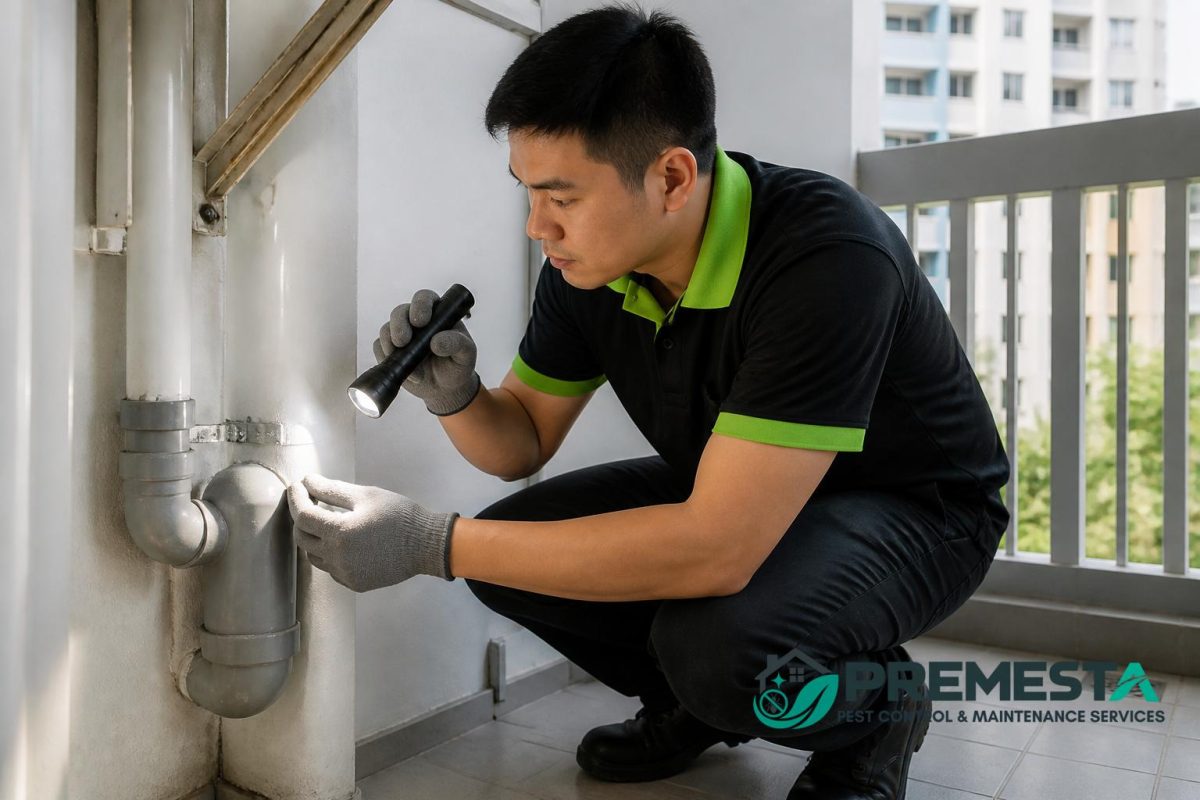
HDB flats typically have compact layouts, shared service areas, and a network of pipes running through walls, floors and ceilings. This makes it practical for the flat, but it also means a leak can stay out of sight for some time. A small drip from a pipe joint, flexible hose, basin trap, or concealed line may spread slowly and affect materials before the source is obvious.
Leaks can also be mistaken for other issues. For example, condensation, poor ventilation, or minor waterproofing wear may create similar symptoms. That is why a careful inspection matters: the aim is to identify patterns, affected areas, and whether the problem appears linked to plumbing or broader property maintenance concerns.
Early signs to look out for
If you suspect a hidden leak, look for changes that happen gradually rather than all at once. Common early indicators include:
- Persistent damp spots on walls, ceilings or floor edges.
- Peeling paint or bubbling plaster, especially near wet areas.
- Musty or stale odours that remain even after cleaning and airing.
- Discoloured grout or tile joints around bathrooms and kitchens.
- Swollen laminate, warped timber or soft skirting boards near the affected zone.
- Mould patches that return after surface cleaning.
- Unusual water meter movement when all taps and appliances are off, if your setup allows you to check this.
These signs are most useful when taken together. A single water stain may be minor, but a stain plus odour plus repeated mould growth is worth closer attention. If the flat is in a block with neighbours above or below, it can also help to note whether the pattern seems to spread from one direction, since leaks may sometimes travel along concealed surfaces.
Areas in the flat where leaks often start
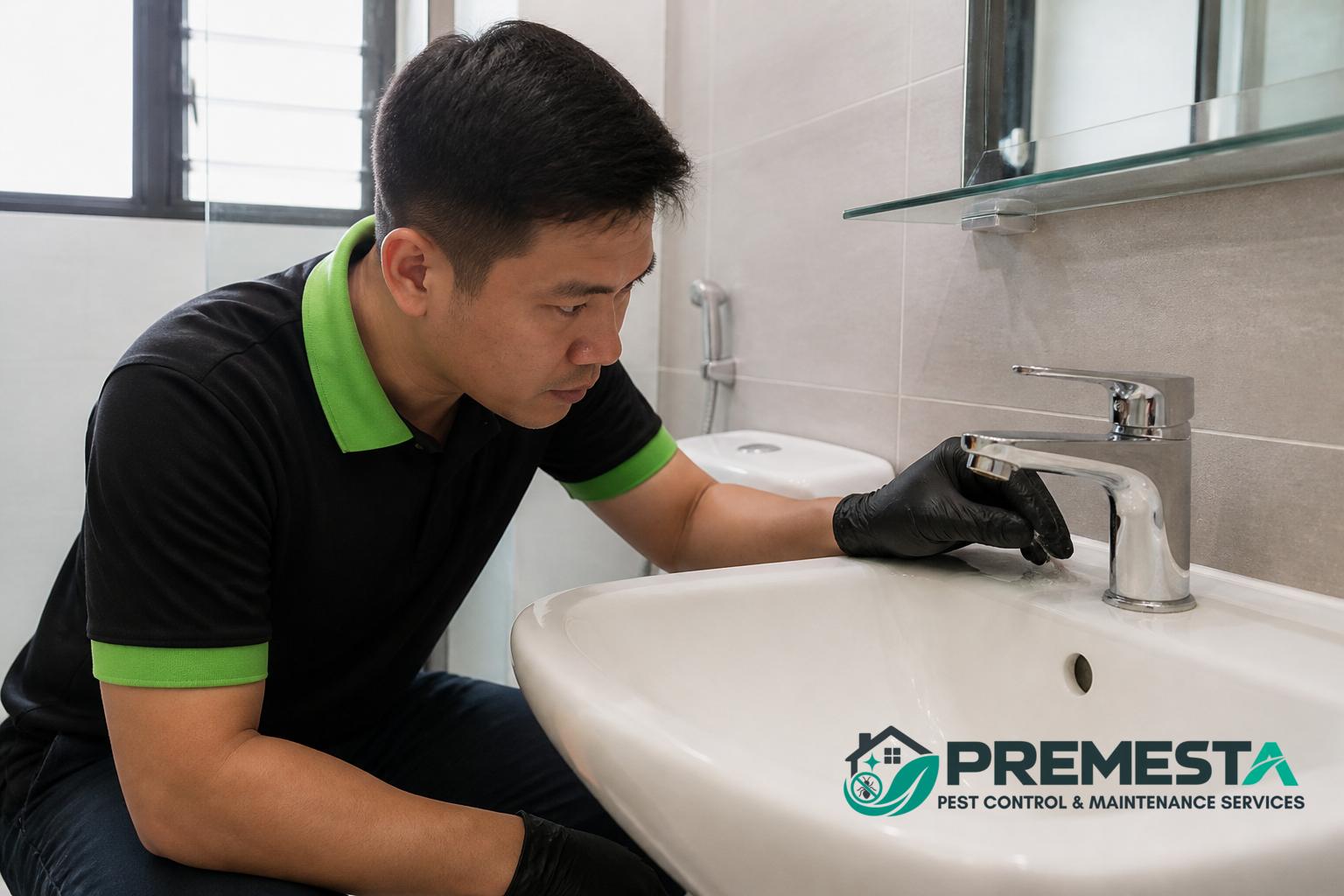
Some parts of an HDB flat deserve closer attention because they are more exposed to water use. In the bathroom, check around the basin, WC base, shower screen edges, floor traps and vanity cabinets. Under the kitchen sink, look for rusted fittings, wet cabinet bases, and stained pipe joints. The washing machine point is another common area, especially where hoses or connectors are under constant pressure.
Ceiling stains below a bathroom or kitchen often suggest that water is moving through hidden paths. Near windows, a damp patch may be linked to rainwater ingress or sealant wear rather than a plumbing leak. This is why property maintenance in Singapore often involves checking both the visible symptom and the possible source, rather than focusing only on the stain itself.
Simple checks you can do before calling for help
There are a few practical checks that may help you narrow down the issue without disturbing the area unnecessarily:
- Wipe the suspected area dry and see whether moisture returns after some time.
- Check whether the dampness increases after showering, using the sink, or running the washing machine.
- Inspect nearby cabinets and skirting boards for soft spots, swelling or odour.
- Look for water marks under sinks and around exposed pipe connections.
- Take clear photos of the area from a distance and up close for comparison later.
Avoid drilling, pulling open concealed panels, or applying sealant randomly to hide the symptom. Without locating the source, temporary fixes may delay proper attention and can make future assessment harder. If the issue appears to involve plumbing, the relevant trade is a plumbing or property maintenance assessment, not a general cleaning job.
Why hidden leaks should be addressed early
Even a slow leak can create wider maintenance concerns over time. Moisture can damage paintwork, cause cabinetry to swell, and encourage mould on walls or behind furniture. In some cases, persistent wetness may also affect nearby electrical fittings or create unpleasant odours that are difficult to remove. The earlier the problem is identified, the easier it is to plan the right repair approach and protect surrounding finishes.
For HDB flats, early attention can also help reduce inconvenience to neighbours if the leak is spreading through shared structures. A prompt check is usually more practical than waiting for visible water seepage to become serious. The main goal is to understand the source, the extent of the dampness, and whether the issue is localised or part of a broader maintenance concern.
How property maintenance and plumbing support the diagnosis
Property maintenance work and plumbing work are related, but they are not the same. Plumbing focuses on pipes, fittings, traps, hoses and water flow points. Property maintenance may involve checking the visible damage, surrounding finishes, cabinet condition, ceiling surfaces, and other affected parts of the flat. In many cases, both perspectives are useful because the leak source and the visible symptom are not always in the same place.
A proper assessment should consider:
- where the moisture is visible,
- how long the sign has been present,
- whether it changes after water usage,
- what materials are affected, and
- whether the leak appears active or residual.
That information helps determine whether further plumbing attention is needed, whether surrounding materials need drying or repair, and whether the issue is confined to one area of the flat.
WhatsApp Premesta Pest Control & Maintenance Services Singapore for an assessment or quotation.
Conclusion
Hidden water leaks in HDB flats often begin with small, easy-to-overlook signs. Damp patches, peeling paint, mould, musty smells and warped materials are all clues that should be checked carefully. By observing where the problem appears, when it changes, and how far it has spread, you can give a clearer picture of the issue and avoid unnecessary guesswork.
For Singapore homeowners and tenants, the best approach is practical: monitor the signs, document the affected area, and arrange the appropriate plumbing or property maintenance assessment when needed. Early action can help limit damage and keep the flat in better condition.
Choose Premesta Pest Control & Maintenance Services Singapore
Premesta Pest Control & Maintenance Services Singapore offers comprehensive pest control, pest management, and property maintenance solutions for residential and commercial properties throughout Singapore. We assist HDB, condominium, and landed homeowners, as well as businesses, in managing pest activity and maintaining their premises. Our pest management solutions include bed bug pest control, bed bug extermination, bed bug treatment, termite control, and preventive measures to reduce the likelihood of recurring infestations. Alongside these treatments, our cleaning services, including sofa cleaning and mattress cleaning, help property owners maintain their indoor spaces.
Our property maintenance solutions include handyman services, plumbing, aircon servicing, electrical services, mould removal, and ventilation fan services. Whether you are experiencing a pest infestation, dealing with maintenance concerns, or arranging routine property upkeep, we help identify suitable services based on your specific needs. Our approach focuses on addressing existing issues while helping homeowners and businesses maintain cleaner, more comfortable, and well-maintained properties.
If you need assistance with pest management, cleaning, or property maintenance in Singapore, browse our blog for useful information or view our completed projects for examples of our work. You can also contact us through WhatsApp at +65 8241 0032 to enquire about our available services, discuss your property’s requirements, and request a quotation.
Frequently Asked Questions
How can I tell if the damp patch is from a leak or just condensation?
Condensation usually appears in cooler, less ventilated areas and may improve with airflow. A leak is more likely if the dampness returns repeatedly, spreads from one point, or appears near a pipe, fitting, sink, bathroom wall or ceiling below a wet area.
Should I clean over the stain first before arranging an assessment?
You may wipe the surface lightly for visibility, but avoid heavy scrubbing or covering the stain straight away. Keeping the area visible makes it easier to observe whether moisture returns and helps when describing the issue during an assessment.
What details should I prepare before asking for help?
Prepare photos, the exact location, when you first noticed the sign, and whether it changes after water use. If the issue is around a sink, bathroom, or washing machine point, include that information as well so the plumbing or property maintenance concern can be reviewed more clearly.